


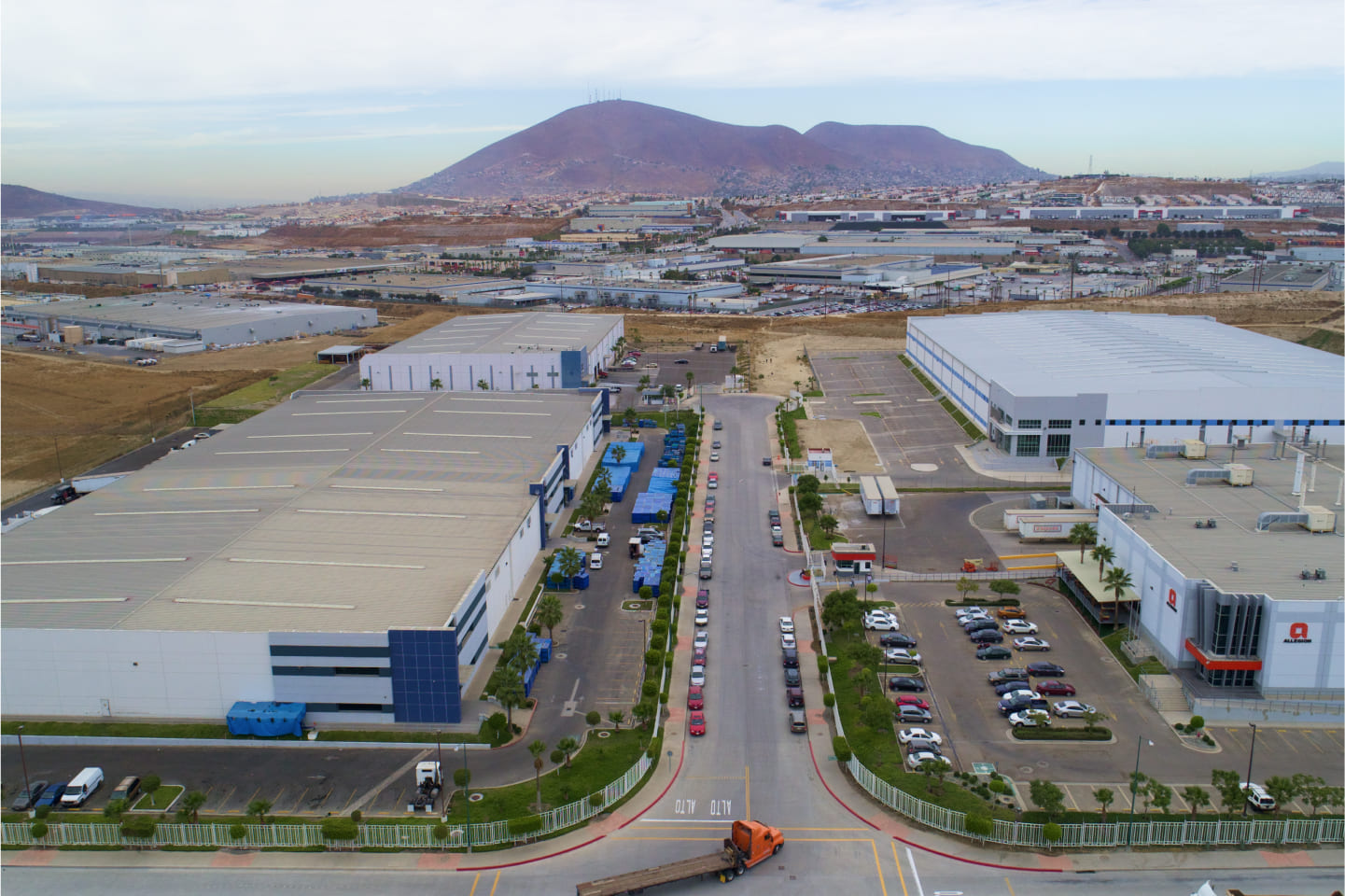
EHS for Mining Companies in Mexico
Centralize permits, environmental compliance, and safety for every mining concession. Standardize EHS by exploration, extraction, or processing phase, and keep all evidence ready for audits and inspections at any time.
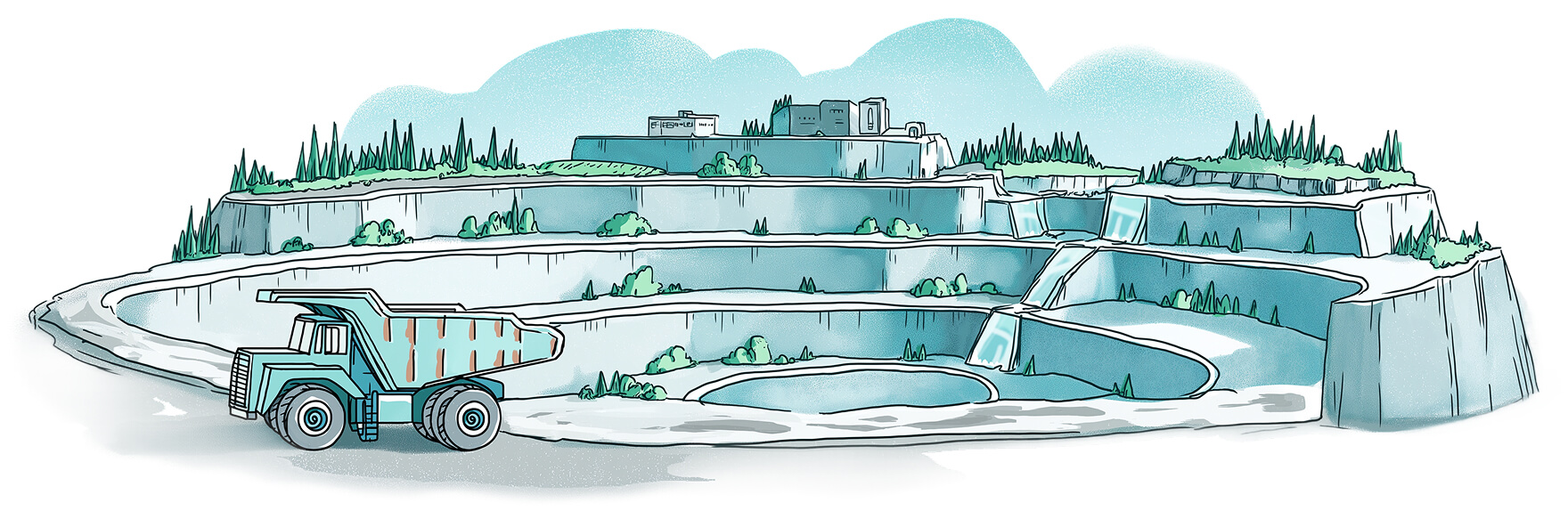
Multiple agencies. One single legal responsible party.
The mining sector in Mexico operates under multiple overlapping authorities and regulations. Understanding who regulates each phase of the concession and anticipating penalties for non-compliance is key to keeping the operation risk-free.

STPS
SECRETARIAT OF LABOR AND SOCIAL WELFARE
The central authority for mining safety. Enforces NOM-023 across all underground and open-pit operations, and NOM-032 exclusively for coal. Inspects rescue brigades, ventilation, and emergency plans. Non-compliance triggers immediate shutdown of the mining unit.

SECRETARIAT OF ECONOMY
GENERAL DIRECTORATE OF MINING DEVELOPMENT
Issues and oversees the mining concession — the title that enables the entire operation. Valid for 50 renewable years, but may be suspended for non-compliance with safety or environmental obligations. Without a valid concession, there is no legal operation.

SEDENA
SECRETARIAT OF NATIONAL DEFENSE
Controls access to explosives under the Federal Firearms Law. Issues the General Permit for the Purchase and Consumption of Explosive Materials for each blasting unit. Without a valid permit, drilling and ore extraction stop completely.

CONAGUA
NATIONAL WATER COMMISSION
Grants national water concessions for extraction and processing. Authorizes wastewater discharge permits. Leaching and flotation consume critical volumes; losing the concession halts processing even if the mine continues operating.

SEMARNAT
SECRETARIAT OF ENVIRONMENT AND NATURAL RESOURCES
Authorizes the Environmental Impact Assessment (MIA) before any extraction begins. Regulates tailings under NOM-141, cyanide leaching under NOM-155, and hazardous waste under NOM-052. A spill triggers immediate PROFEPA shutdown and remediation liability extending for decades.
WHY THE MINING SECTOR IS DIFFERENT
Each phase of the mining concession changes regulatory compliance.
In mining, exploration, extraction, and processing trigger different environmental permits, safety requirements, and regulatory obligations. Mining compliance is not fixed; it evolves as the concession and operation grow.
The workplace changes every day
Every gallery advancement or bench blast creates a new front with new conditions. NOM-023 requires documenting the safety status per area in real time, rather than for a fixed facility.
Six agencies inspect the same license holder
STPS, SEMARNAT, SEDENA, CONAGUA, the Secretariat of Economy, and Civil Protection all regulate the same concession. A failure to comply with any one of them can suspend the entire operation.
The method and the mineral determine the NOMs
A coal mine carries NOM-032 and methane gas monitoring. A leaching plant requires NOM-155 and cyanide manifests. There is no single catalog; every operation has its own.
Risk cannot be outsourced
Drilling, blasting, and maintenance are frequently executed by third parties. The Federal Labor Law and NOM-023 attribute safety responsibility to the concessionaire without exception.

Five types of mining.
Five different compliance profiles.
Gold and Silver Mining
Mexico is the world's leading silver producer and eighth in gold. Operations are concentrated in Zacatecas, Sonora, and Chihuahua, using mixed methods: underground in historical veins and open-pit with leaching in low-grade deposits. The combination of blasting, cyanide, and tailings simultaneously activates STPS, SEMARNAT, SEDENA, and CONAGUA for the same concession holder.
Key Risk
HOW NAPSSOFT SOLVES IT

A cyanide solution spill triggers immediate PROFEPA shutdown and remediation liability that extends for decades.
Tailings storage facilities without continuous monitoring under NOM-141 are the environmental liability most frequently sanctioned by SEMARNAT in the sector.
Financial OEMs and investment funds audit EHS as part of due diligence; a unit without systematized evidence blocks access to capital.
HOW NAPSSOFT SOLVES IT

Configure the catalog by processing method: leaching, flotation, or both, without duplicating obligations between the mine and the plant.
Track the tailings monitoring program, water quality, and SEDENA permits in a single view per unit, with automatic expiration alerts.
Generate evidence packages for STPS and SEMARNAT inspections and for GRI and IFC reports simultaneously from the same data source.
Key Permits/NOMs:
NOM-023 STPS
NOM-141 TAILINGS
NOM-155 CYANIDE LEACHING
MIA SEMARNAT
NOM-010 DUST/SILICA
SEDENA EXPLOSIVES PERMIT
Copper Mining
Mexico is home to some of the largest copper mines in Latin America — Buenavista del Cobre and La Caridad in Sonora. Large-scale open pits with sulfuric acid leaching of oxides and sulfide flotation. The 2014 Sonora River spill redefined the sector's regulatory exposure: PROFEPA, CONAGUA, and SEMARNAT now inspect with reinforced protocols.
Key Risk
HOW NAPSSOFT SOLVES IT
Sulfuric acid leaching without adequate containment compromises aquifers and triggers criminal liability for operation executives.
Copper tailings without NOM-141 monitoring can result in total suspension of operations by SEMARNAT for an indefinite period.
The CONAGUA water concession is the most difficult permit to renew; losing it paralyzes processing even if the mine continues operating.
HOW NAPSSOFT SOLVES IT
Manage NOM-159 and NOM-141 as modules linked to the same unit, with monitoring schedules and evidence per event.
Track conceded vs. consumed volumes and reporting dates to CONAGUA to avoid non-compliance by omission.
Centralize environmental evidence required by IFC standards and Equator Principles for large-scale project financiers.
Key Permits/NOMs:
NOM-023 STPS
NOM-159 COPPER LEACHING
NOM-052 HAZARDOUS WASTE
MIA SEMARNAT
SEDENA EXPLOSIVES PERMIT
LAU ATMOSPHERIC EMISSIONS
Coal Mining
Coahuila accounts for 95% of national production. Underground mines with seams that accumulate methane gas: odorless, colorless, explosive. NOM-032 exists because Pasta de Conchos and Pinabete demonstrated what happens without it. This is the segment with the most specialized inspection protocol and the highest fatality rate in the entire Mexican mining industry.
Key Risk
HOW NAPSSOFT SOLVES IT
Methane gas without continuous detection can accumulate to explosive concentrations in minutes, with direct criminal liability for the concessionaire.
The absence of physical emergency shelters inside the mine results in immediate closure without the possibility of on-site regularization.
Specialized STPS inspectors for coal demand a level of technical detail that exceeds any other industrial inspection protocol in Mexico.
HOW NAPSSOFT SOLVES IT
Configure the 26 concessionaire points and 17 personnel points under NOM-032 as trackable items with evidence and an assigned responsible party.
Manage gas detection, brigade drills, and shelter status in a unified view by mine level and front.
Generate the technical file in the format required by specialized STPS inspectors for coal mining.
Key Permits/NOMs:
NOM-032 COAL SAFETY
NOM-010 COAL DUST
NOM-033 CONFINED SPACES
SEDENA EXPLOSIVES PERMIT
NOM-035 PSYCHOSOCIAL RISK
Zinc and Lead Mining
Mexico is the world's fifth-largest lead producer and one of the top ten for zinc. Predominantly underground polymetallic operations in Zacatecas, San Luis Potosí, and Durango. The toxicological profile of lead — cumulative, with no safe exposure threshold — creates long-term legal liabilities if occupational exposure is not correctly documented from day one.
Key Risk
HOW NAPSSOFT SOLVES IT
Lead exposure without documented monitoring generates occupational disease lawsuits years later, with direct liability for the concessionaire.
Sulfide flotation waste generates acid rock drainage, one of the most costly environmental liabilities recognized by SEMARNAT.
Without a legally authorized engineer designated and documented, any STPS inspection in an underground mine results in closure.
HOW NAPSSOFT SOLVES IT
Track lead exposure per worker and per area, generating the history that protects the concessionaire against occupational disease claims.
Manage the NOM-157 management plan with renewal alerts linked directly to SEMARNAT hazardous waste manifests.
Configure full NOM-023 for polymetallic underground mining, including designation of the responsible engineer and emergency plan per front.
Key Permits/NOMs:
NOM-023 STPS
NOM-010 LEAD EXPOSURE
NOM-157 WASTE MANAGEMENT PLAN
NOM-052 HAZARDOUS WASTE
MIA SEMARNAT
NOM-141 TAILINGS
Non-Metallic and Industrial Mining
Mexico has the world's largest fluorite mine and is a relevant producer of gypsum for construction. Open-pit operations, dispersed and frequently medium and small scale. The most heterogeneous sector of Mexican mining — and the one that operates with the greatest regulatory informality, making it a frequent target of PROFEPA and STPS operations.
Key Risk
HOW NAPSSOFT SOLVES IT
Silicosis from exposure to silica dust generates permanent disability lawsuits with direct employer liability, years after exposure.
PROFEPA closes quarries operating without MIA in areas with nearby communities; operations have intensified since 2023.
The informality of the sector creates a false sense of low risk; STPS and SEMARNAT apply the same sanctions regardless of the scale of the operation.
HOW NAPSSOFT SOLVES IT
Configure respirable dust monitoring per front with NOM-010 thresholds, generating the history that protects against silicosis lawsuits.
Track MIA, municipal licenses, and blasting permits on one dashboard, with preventive alerts before each expiration.
Scale from a single quarry to a multi-site portfolio without changing platforms or data structure.
Key Permits/NOMs:
NOM-023 STPS
NOM-010 SILICA / RESPIRABLE DUST
NOM-157 MINING WASTE
NOM-004 MACHINERY
SEDENA EXPLOSIVES PERMIT
MUNICIPAL LICENSE
configured for your industry
From physical files per mine to portfolio control.
A system that understands mining regulation in Mexico, not a generic document manager that you have to adapt for every concession or operation.

Reports by Regulatory Authority
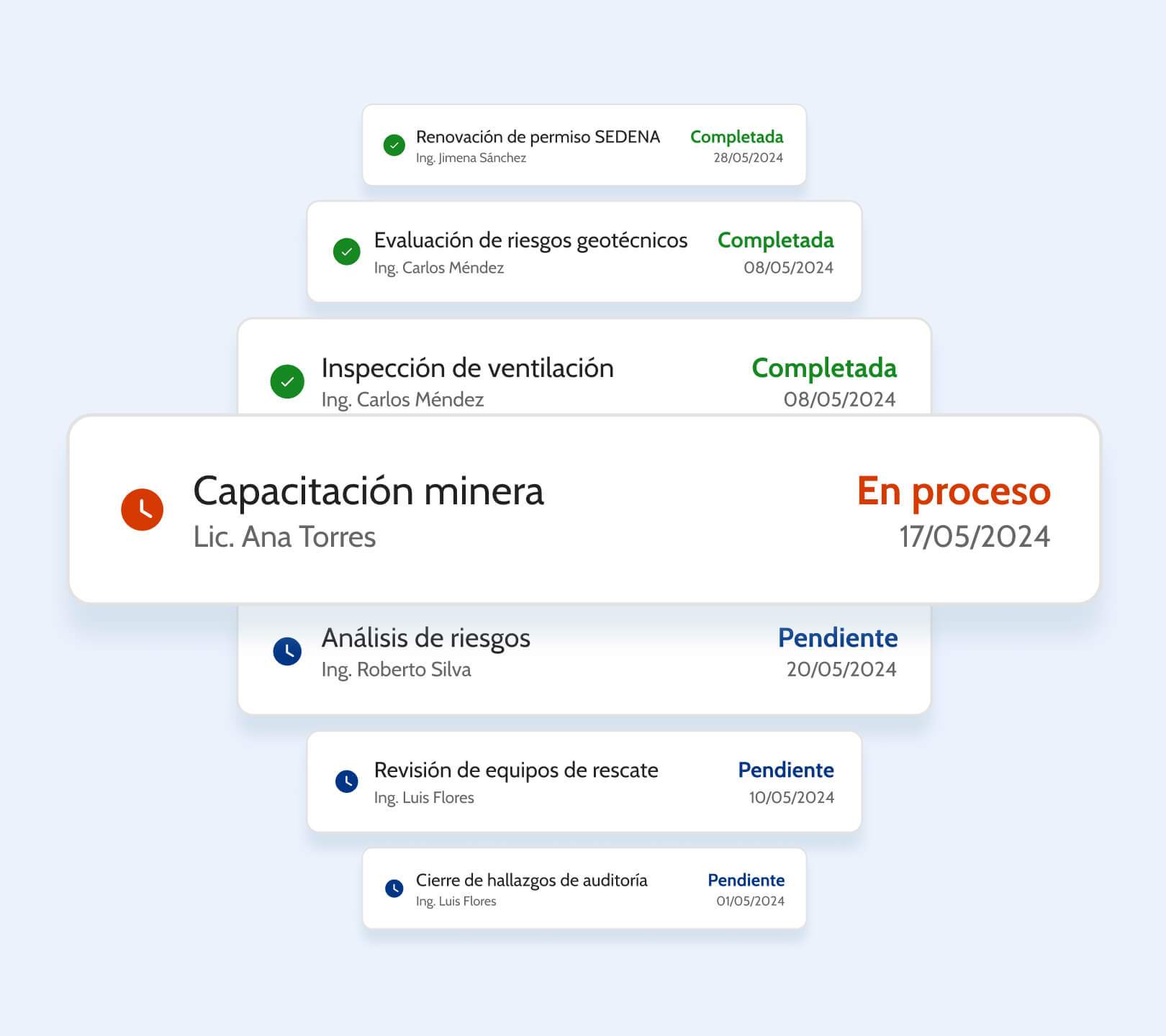
Complete Traceability
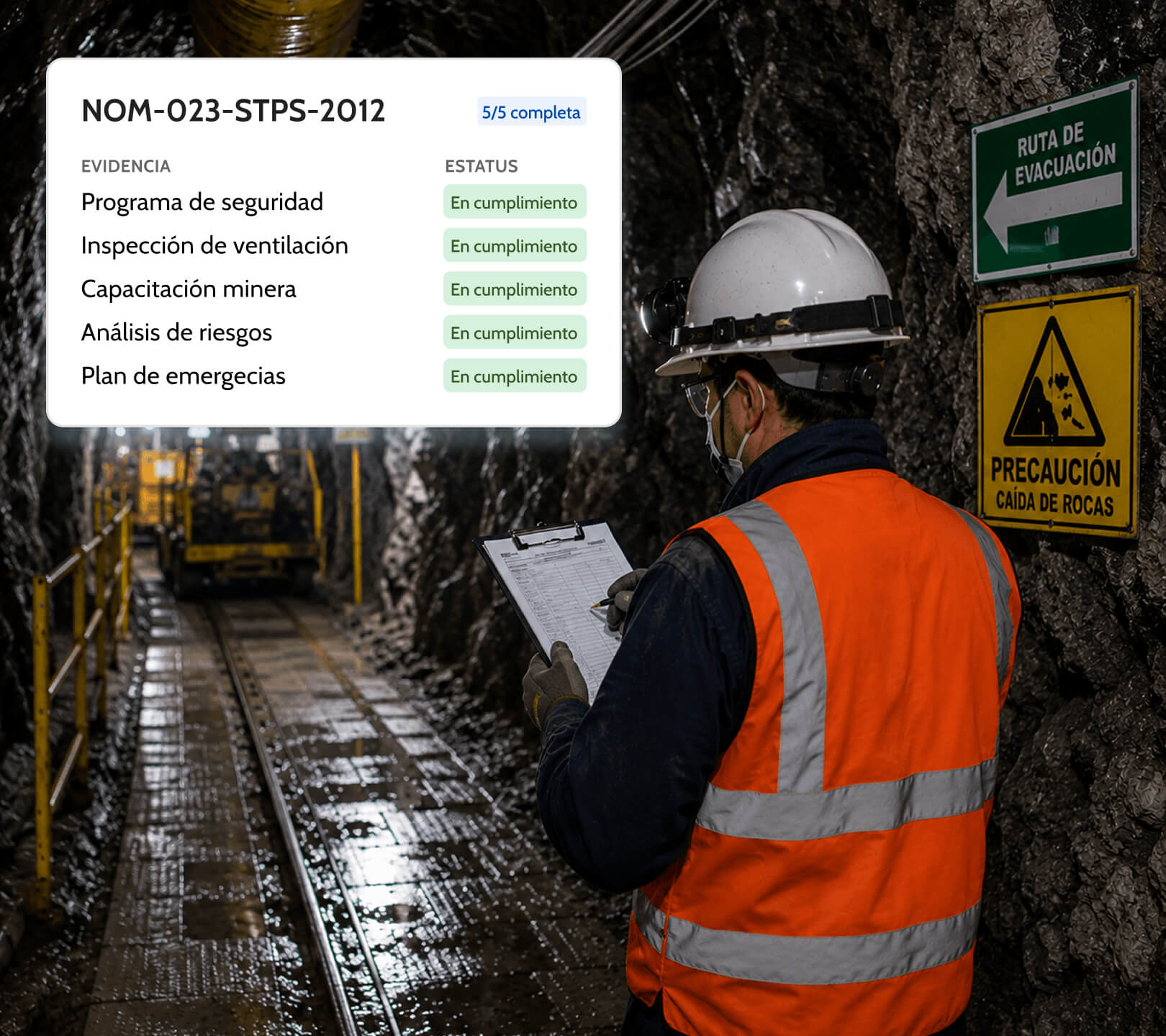
Inspection-Ready Evidence
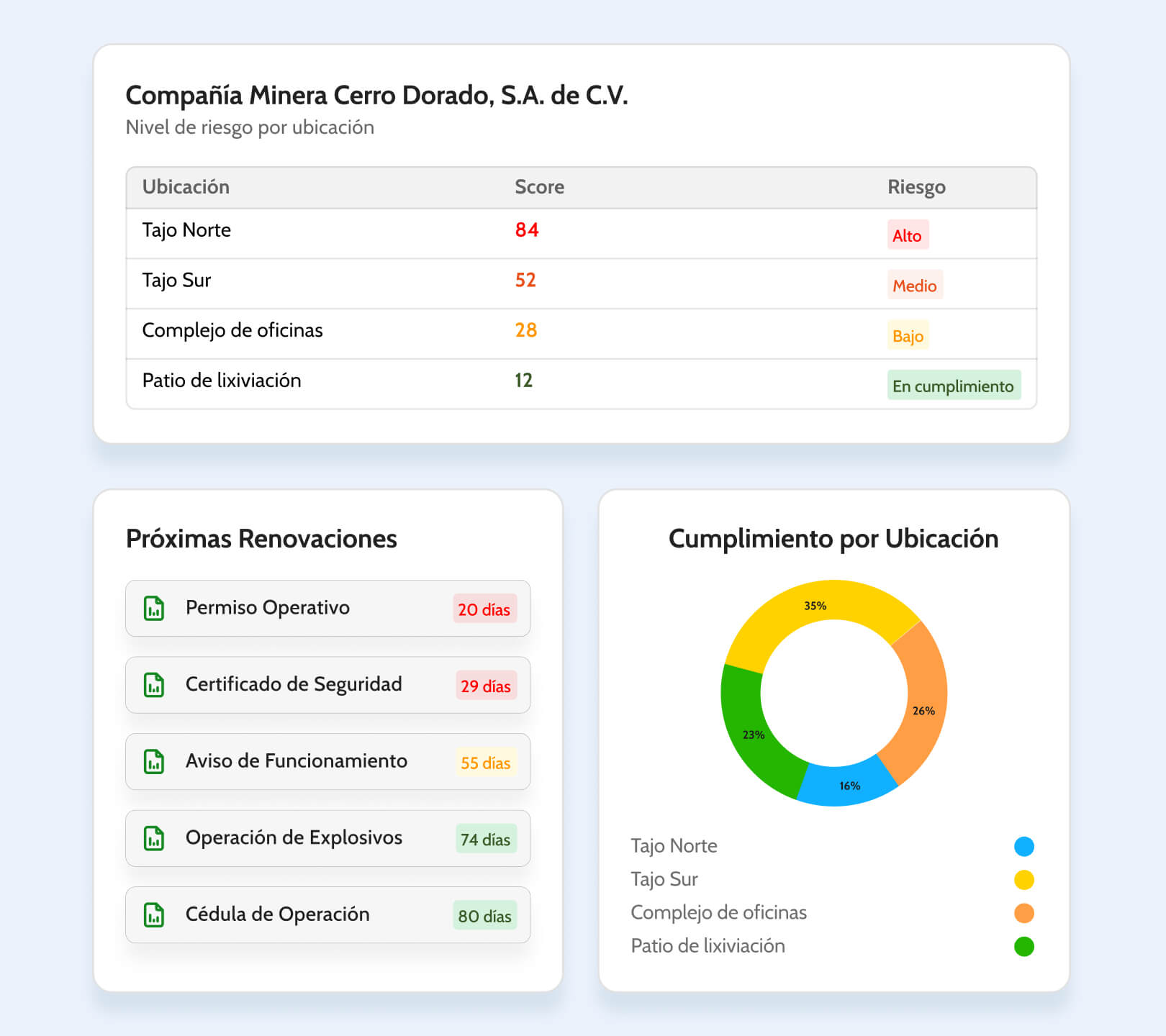
Critical Renewals, Without Missing One
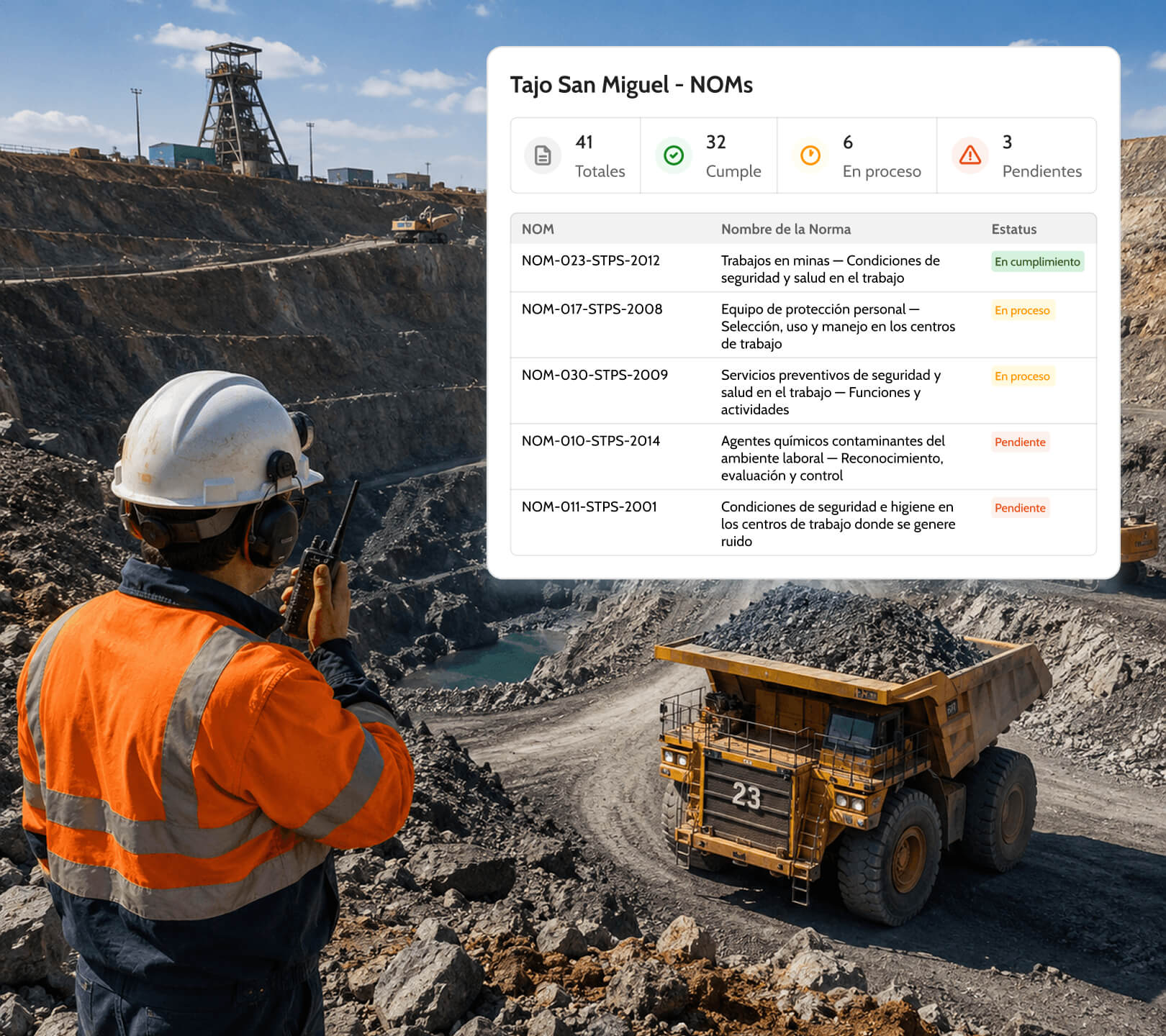
One Catalog per Mining Unit
Permit Catalog — MINING
Comprehensive permit database for mining operations in Mexico.
Each mining unit receives a configured subset. Company-wide obligations are tracked separately.
| Mining concession | SE / DGM | 50 years (with annual verification of works) | Critical | Annual report of works, rights payment receipts |
| Environmental Impact Assessment (MIA) | SEMARNAT | Pre-operative (permanent conditions) | Critical | MIA study, condition compliance reports |
| Land Use Change in Forest Lands (CUSTF) | SEMARNAT | Pre-operative | Critical | CUSTF authorization, reforestation program |
| Single Environmental License (LAU) | SEMARNAT | Annual renewal or modification | Critical | Emissions monitoring, annual COA |
| Registration as a hazardous waste generator | SEMARNAT | One-time + semi-annual manifests | High | Manifests according to NOM-052, transport logs |
| Mining waste management plan | SEMARNAT | According to NOM-157 | High | Waste characterization, management plan |
| Tailings dam management | SEMARNAT | According to NOM-141 (continuous) | Critical | Structural inspections, stability studies, monitoring |
| Environmental protection for leaching pads (gold and silver) | SEMARNAT | According to NOM-155 (continuous) | Critical | Geomembrane integrity, solution management, monitoring |
| Environmental protection for leaching pads (copper) | SEMARNAT | According to NOM-159 (continuous) | Critical | Requirements equivalent to NOM-155 adapted for copper |
| Remediation of contaminated soils | SEMARNAT / SSA | According to NOM-147 (when applicable) | High | Soil sampling, remediation plan |
| National water use concession | CONAGUA | Variable (5 to 30 years) | Critical | Water meters, extraction volumes, annual report |
| Wastewater discharge permit | CONAGUA | Variable | Critical | Water quality analysis, discharge monitoring |
| NOM-023-STPS – Work in mines, safety and health conditions at work | STPS | Continuous (annual evidence) | Critical | Ventilation logs, structural inspections, training |
| NOM-032-STPS – Safety for underground coal mines | STPS | Continuous (coal only) | Critical | Methane monitoring, dust control, ventilation |
| General NOM-STPS compliance program | STPS | Ongoing | High | Risk assessment, training records, equipment certifications |
| General explosives permit | SEDENA | Annual renewal | Critical | Powder magazine inspection, inventories, consumption logs |
| Specific blasting permits | SEDENA | Per operation | Critical | Blasting plan, safety perimeter documentation |
| Internal Civil Protection Program | Civil protection | Annual renewal | High | Emergency plan, brigade certifications, drills |
| Annual Operation Certificate (COA) | SEMARNAT | Annual (deadline in March) | High | Emissions data, waste volumes, water consumption |
| Voluntary Environmental Audit (PAAL) | PROFEPA | Voluntary (2-year cycle) | Medium | Audit report, corrective action plan |
| Environmental protection measures for mining exploration | SEMARNAT | Per exploration campaign | High | Evidence of implementation of environmental protection measures |
Critical = closure or suspension of concession · High = fines + restrictions · Medium = administrative
Ideal profiles for NAPSsoft EHS in mining
Beneficiation and smelting plants
Processing facilities using hazardous chemicals concentrate the sector’s highest environmental and process risks.
EHS consulting firms for mining
Manage compliance for multiple mining clients from a single platform with portfolio-level visibility.
Metal and coal mining
Gold, silver, copper, and coal carry the heaviest EHS compliance burden and the highest scrutiny from STPS and SEMARNAT.
Companies with institutional financing
Investors, funds, and stock exchanges require systematic EHS evidence. The EHS audit is part of due diligence.
Expanding Mining Groups
Mining companies that are integrating new concessions and need to scale compliance without scaling their team.
Companies with 2+ active units
The more units and the more diverse the mix of minerals and methods, the greater the platform’s value.
Beneficiation and smelting plants
Processing facilities using hazardous chemicals concentrate the sector’s highest environmental and process risks.
EHS consulting firms for mining
Manage compliance for multiple mining clients from a single platform with portfolio-level visibility.
Metal and coal mining
Gold, silver, copper, and coal carry the heaviest EHS compliance burden and the highest scrutiny from STPS and SEMARNAT.
Companies with institutional financing
Investors, funds, and stock exchanges require systematic EHS evidence. The EHS audit is part of due diligence.
Expanding Mining Groups
Mining companies that are integrating new concessions and need to scale compliance without scaling their team.
Companies with 2+ active units
The more units and the more diverse the mix of minerals and methods, the greater the platform’s value.
MINING COMPLIANCE CONTROL