



Complete Guide to STPS NOMs for Industrial Operations in Mexico
The Secretaría del Trabajo y Previsión Social (STPS) enforces 41 permanent Official Mexican Standards governing occupational safety and health across every employer in Mexico. These are not guidelines. They are mandatory standards with the force of law, and non-compliance carries fines of up to 5,000 UMAs ($566,300 MXN) per violation, with the possibility of facility shutdown for repeated or severe infractions.
But not all 41 NOMs apply to every workplace. A chemical plant faces a very different NOM profile than a retail pharmacy or a hospital. Understanding which NOMs apply to your specific operations — and what evidence each requires — is the foundation of any effective EHS compliance program in Mexico.
This guide covers every active STPS NOM organized by category, with practical guidance on industry applicability, inspection priorities, recent updates and the specific evidence each standard requires.
Three Categories, 41 Standards
The STPS organizes its NOMs into three categories based on the type of risk they address.
Safety NOMs (NOM-001 to NOM-034)
13 standards covering physical workplace hazards: building safety, fire prevention, machinery, hazardous substances, materials handling, work at heights, electrical systems, confined spaces, welding and process safety. These are the NOMs most frequently cited during inspections and carry the highest risk of operational shutdown.
Health NOMs (NOM-010 to NOM-036)
8 standards covering occupational health: air quality and chemical exposure limits, noise, vibration, ionizing radiation, thermal extremes, lighting and ergonomics. They require periodic monitoring studies and medical surveillance programs.
Organization and PPE NOMs (NOM-017 to NOM-030)
6 standards covering safety management systems: personal protective equipment, safety signage, safety and hygiene commissions, preventive services, emergency color coding and psychosocial risk. They define the organizational infrastructure of your EHS program.
Critical Safety NOMs — The Standards That Shut Plants Down
NOM-001-STPS — Building Safety Conditions
Risk: High. Applies to all workplaces with buildings or structures. Required evidence: building safety inspection reports, structural evaluations, emergency exit verification, documentation of floor and roof conditions.
NOM-002-STPS — Fire Prevention and Protection
Risk: Critical. Applies to all workplaces — 87% violation rate in STPS inspections in 2024. Required evidence: fire risk analysis, fire prevention program, extinguisher maintenance logs, brigade training records, emergency evacuation plan and drill records. This is the most cited NOM in Mexico.
NOM-004-STPS — Machinery and Equipment Safety
Risk: Critical. Applies to manufacturing, industry, any workplace with production machinery. Required evidence: machinery safety inspection records, guard verification, LOTO (Lockout/Tagout) procedures, operator training certificates, maintenance logs. One of the highest volume search terms with 2,700 searches/month in Mexico.
NOM-005-STPS — Handling of Hazardous Substances
Risk: Critical. Applies to chemical plants, manufacturing with solvents/paints/adhesives, any operation with CRETIB materials. Required evidence: hazardous substance inventory, Safety Data Sheets (SDS), handling procedures, spill response protocols, exposure monitoring, PPE records.
NOM-006-STPS — Handling and Storage of Materials
Risk: High. Applies to warehouses, manufacturing, logistics, any workplace with forklifts or cranes. Required evidence: forklift operator certifications, equipment inspection logs, load capacity documentation, storage procedures, training records.
NOM-009-STPS — Work at Heights
Risk: Critical. Applies to construction, maintenance, manufacturing with elevated platforms or equipment. Required evidence: work at heights permits, fall protection equipment certifications, training records, rescue procedure documentation, height-specific risk assessments.
NOM-028-STPS — Critical Process Safety
Risk: Critical. Applies to chemical plants, refineries, high-risk industrial operations with potential for catastrophic events. Required evidence: process safety management system (17 elements), hazard analysis (HAZOP), management of change procedures, emergency response plans, incident investigation records. The most demanding NOM in the entire system.
NOM-029-STPS — Maintenance of Electrical Installations
Risk: High. Applies to all workplaces with electrical installations requiring maintenance. Required evidence: electrical maintenance program, qualified personnel certifications, work permits for electrical tasks, equipment testing records, arc flash analysis.
NOM-033-STPS — Work in Confined Spaces
Risk: Critical. Applies to manufacturing (paint booths, ovens, tanks), chemical plants, public services. Required evidence: confined space inventory, entry permits, atmospheric monitoring records, rescue equipment certifications, training for entrants and attendants.
Occupational Health Standards
NOM-010-STPS — Workplace Air Quality and Chemical Exposure
Risk: High. Applies to chemical plants, manufacturing with solvents/paints, any operation with airborne contaminants. Required evidence: air quality monitoring studies (periodic), exposure limit compliance records, ventilation system maintenance, medical surveillance for exposed workers.
NOM-011-STPS — Noise Exposure
Risk: High. Applies to manufacturing, construction, any workplace exceeding 80 dB(A). Required evidence: noise level studies, noise exposure maps, hearing conservation program, audiometric test records, PPE compliance (hearing protection).
NOM-012-STPS — Ionizing Radiation
Risk: Critical. Applies to hospitals (radiology), industrial radiography, nuclear facilities, laboratories. Required evidence: radiation permits (CNSNS), dosimetry records, radiological protection program, personnel monitoring, equipment calibration records.
NOM-014-STPS — Thermal Extremes (High Temperature)
Risk: High. Applies to foundries, glass manufacturing, bakeries, any high-temperature industrial process. Required evidence: heat stress assessments, work/rest schedules, hydration programs, medical surveillance, environmental monitoring.
NOM-015-STPS — Thermal Extremes (Low Temperature)
Risk: Medium. Applies to cold storage facilities, food processing (freezers), outdoor operations in cold regions. Required evidence: cold stress assessments, protective clothing records, work/rest schedules, medical surveillance.
NOM-025-STPS — Lighting Conditions
Risk: Medium. Applies to all workplaces, particularly offices, manufacturing floors, hospitals. Required evidence: lighting level studies (lux measurements), compliance with minimum levels per task, lighting system maintenance records.
NOM-036-STPS — Ergonomics and Manual Handling of Loads
Risk: High. Applies to manufacturing, warehousing, healthcare, any operation involving repetitive tasks or heavy lifting. Required evidence: ergonomic risk assessments, documentation of manual handling weight limits, workstation evaluations, corrective action records.
"A single automotive plant can have up to 25 applicable NOMs. It's not that the teams don't know. It's that tracking them all, at each site, with the evidence ready for when the inspector arrives... that's another level."
Organization and PPE Standards — Safety Management Infrastructure
NOM-017-STPS — Personal Protective Equipment (Updated 2024)
Risk: High. MAJOR UPDATE: new standard published March 2025, mandatory September 2025. Applies to all workplaces. Required evidence: PPE risk assessment matrix, inventory of certified PPE (now required from accredited bodies — this is new), biological risk classifications (new), PPE training records, delivery and replacement logs. The 2024 update doubles the standard's length and significantly expands requirements. Every manufacturer in Mexico must review and update their PPE program before September 2025.
NOM-018-STPS — Hazard Communication and SDS
Risk: High. Applies to any workplace with hazardous chemicals, aligned with GHS (Globally Harmonized System). Required evidence: Safety Data Sheet (SDS) system, container labeling compliance, GHS pictograms, worker training on hazard identification, SDS accessibility verification.
NOM-019-STPS — Safety and Hygiene Commissions
Risk: High. Mandatory for all workplaces with employees. Required evidence: commission constitution acts, meeting minutes (minimum monthly), workplace inspection reports by the commission, corrective action follow-up records, commission member training.
NOM-026-STPS — Safety Signage and Colors
Risk: Medium. Applies to all workplaces, particularly industrial and manufacturing. Required evidence: signage plan, photographic evidence of signage placement, compliance with NMX color standards, periodic reviews of signage condition.
NOM-030-STPS — Preventive Safety and Health Services
Risk: High. Applies to all workplaces — defines the structure of your EHS program. Required evidence: annual safety and health plan (diagnosis), program implementation records, designation of responsible person, safety inspection reports, corrective action follow-up.
NOM-035-STPS — Psychosocial Risk Factors
Risk: High. Applies to all workplaces, actively inspected since 2019. Fines from $1,364 to $27,291 USD. Required evidence: psychosocial risk identification questionnaires (workplace surveys), results analysis, organizational action plan, protocols for severe traumatic events, favorable organizational environment measures. Companies with 50+ employees require a complete diagnosis.
The NOM-017-STPS-2024 Update — The Biggest PPE Change in a Decade
The updated NOM-017-STPS-2024 was published in March 2025 and becomes mandatory for all employers in September 2025. It is not a minor update.
What changed: The new standard is twice as long as its predecessor. It now requires PPE certified by accredited conformity assessment bodies (previously only recommended). It adds biological risk classifications that did not exist in the previous version. It expands the risk assessment methodology to include more granular hazard identification by work area and task. And it requires documented evidence of PPE selection criteria linked to specific risk assessments — not just generic PPE delivery.
What it means for your operation: Every manufacturer, every plant, every industrial operation in Mexico must review and update their PPE program before September 2025. This includes updating the risk assessment matrix by work area, verifying PPE certifications from accredited bodies, adding biological risk classifications where applicable, and documenting the link between specific hazards and specific PPE selections.
Which NOMs Apply to Your Industry
Automotive Manufacturing
Full STPS program: NOM-001, 002, 004, 005, 006, 009, 010, 011, 017, 018, 019, 025, 026, 029, 030, 033, 035, 036. Emphasis on NOM-004 (machinery), NOM-005 (chemicals in paint/electroplating), NOM-009 (maintenance at heights), NOM-033 (confined spaces in paint booths). Typically 20 to 25 applicable NOMs per plant.
Food and Beverage Manufacturing
NOM-001, 002, 004, 005, 006, 010, 017, 019, 025, 026, 030, 035, 036. Less emphasis on confined spaces and work at heights. Additional complexity due to overlap with COFEPRIS NOM-251 for food hygiene. Emphasis on NOM-010 (air quality in processing areas), NOM-036 (ergonomics for repetitive tasks).
Chemical and Plastics Manufacturing
Full STPS program plus NOM-028 (critical process safety) — the most demanding NOM in the system. NOM-005 (hazardous substances), NOM-010 (exposure limits), NOM-018 (hazard communication/SDS), NOM-033 (confined spaces). Higher total compliance burden per plant.
Retail and Commercial Operations
NOM-001, 002, 017, 019, 025, 026, 030, 035. Simpler NOM profile per location but multiplied by 50 to 500 sites. Fire safety NOM-002 is the most common violation — 87% of businesses inspected in 2024.
Healthcare Facilities
NOM-001, 002, 005, 012 (ionizing radiation for radiology), 017, 019, 025, 026, 030, 035. Unique addition of radiation NOMs. Overlap with COFEPRIS health services licensing and NOM-087 for infectious biological waste.
Oil & Gas Operations
Full STPS program plus ASEA/SASISOPA framework. NOM-005 (hydrocarbons), NOM-009 (work at heights in infrastructure), NOM-028 (process safety for refineries/terminals), NOM-029 (electrical in hazardous areas), NOM-033 (tank entry). Some of the most complex compliance profiles in Mexico.
What STPS Inspectors Really Look For
STPS inspections can be ordinary (scheduled), extraordinary (triggered by an accident or complaint), or verification (follow-up on previous findings). In all cases, inspectors follow a structured protocol but have discretion over what to examine.
Most Commonly Cited Violations (2024 data)
Fire prevention NOM-002 consistently leads — 87% of businesses inspected had at least one violation. PPE NOM-017 is the second most cited, which will intensify with the 2024 update. Safety commission deficiencies NOM-019 (incomplete minutes, untrained members). Preventive services NOM-030 (no annual safety plan or outdated diagnosis). Psychosocial risk NOM-035 (incomplete questionnaires or no action plan).
The pattern is clear: inspectors focus first on organizational NOMs (do you have the programs?) and then on evidence NOMs (can you demonstrate you are executing them?). Having a fire prevention program is not enough. You need the fire risk study, extinguisher maintenance logs, brigade training records, and drill documentation. The system must produce evidence, not just policies.
From Knowing NOMs to Controlling Them
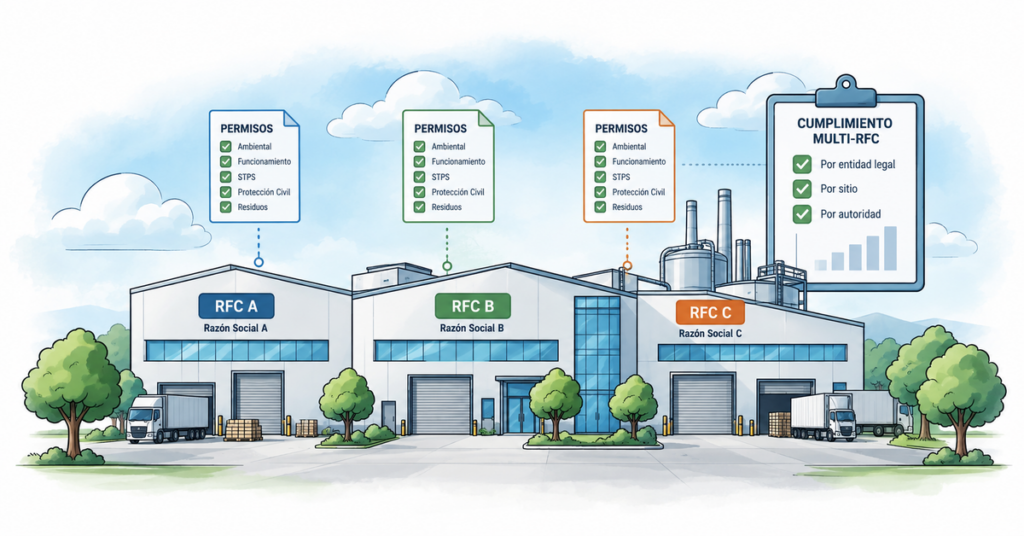
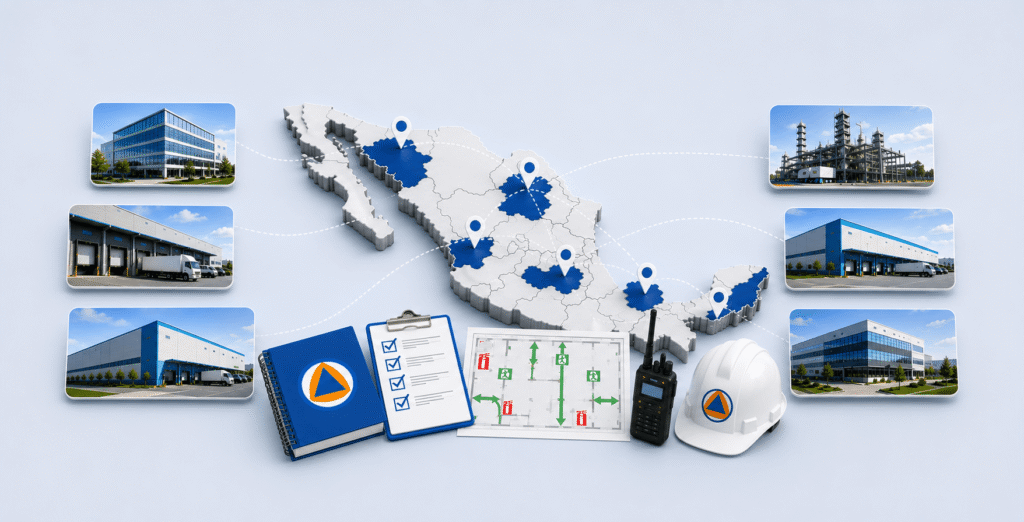
Knowing the NOMs is the starting point. Managing them across multiple plants — each with a different combination of applicable standards, different evidence requirements, and different inspection timelines — is where most EHS programs break down.
NAPSsoft EHS structures each applicable NOM as a compliance category with linked evidence, assigned responsibilities, verification schedules, and traffic light status. When the STPS issues an update like NOM-017-2024, the platform reflects the change in each applicable plant simultaneously. When an inspector arrives, the evidence is one click away.
The goal is not just to know which NOMs apply. It is to be able to demonstrate compliance for each of them, at each site, at any time.
Everything About EHS Software for Mexico
Take your compliance to the next level