



EHS for Retail in Mexico
Manage licenses, renewals, and evidence across dozens or hundreds of locations. Standardize permits per store, control local variations, and prevent expirations before they become operational risks.

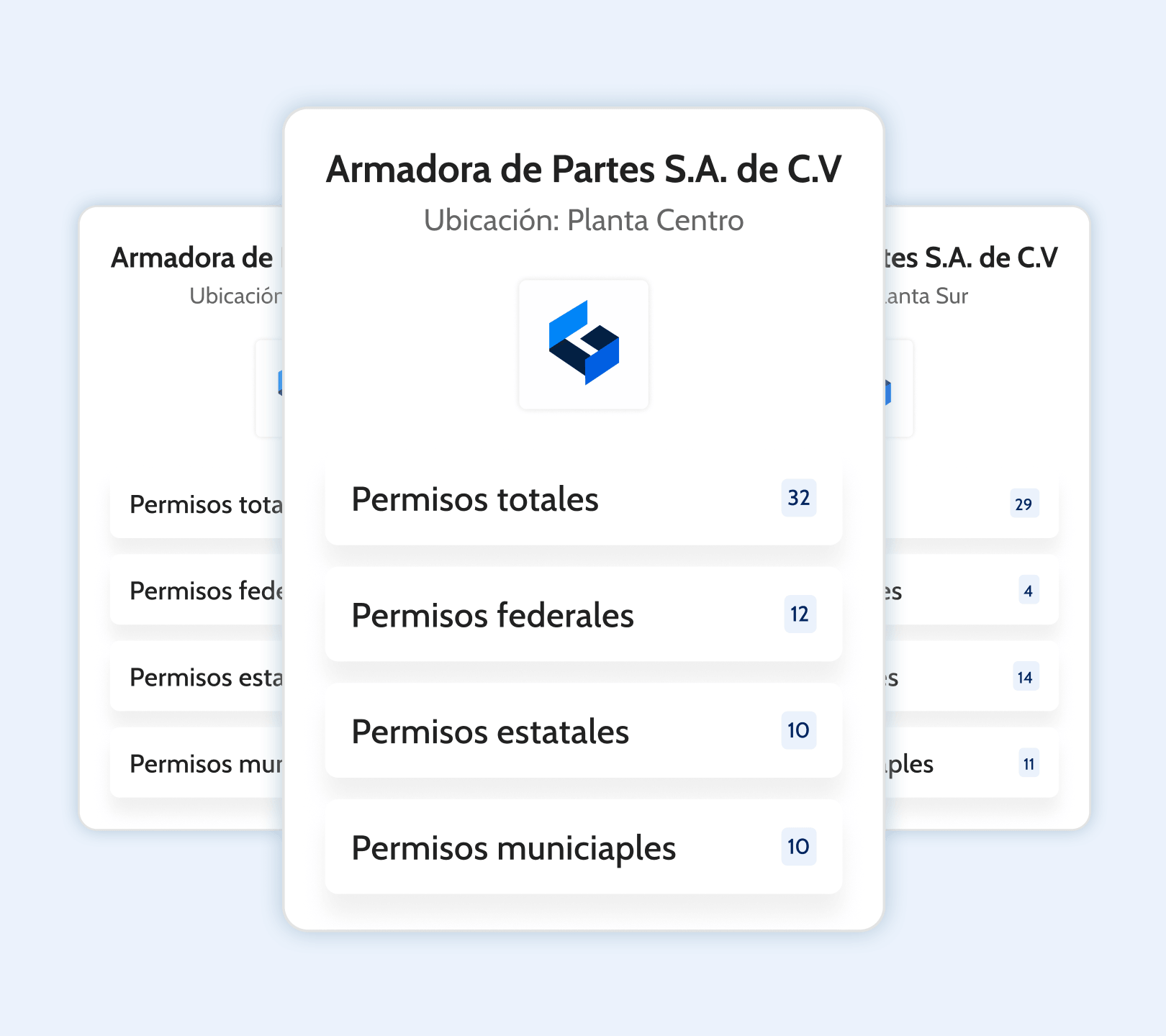
Multiple Authorities and Rules Per Location
Manage federal and municipal requirements per store without losing visibility or control.

Civil protection
State and Municipal
The most critical authority for retail. Every business requires an Internal Civil Protection Program (PIPC). Its risk level determines the requirements: brigades, drills, emergency plans, and fire analysis. Inspections can lead to immediate closure. In Mexico City, the NT-SGIRPC-2024 standard updated drill and compliance requirements for all establishments.

STPS
Safety NOMs
Federal occupational safety standards apply to every retail location: NOM-001 (building safety), NOM-002 (fire prevention and protection, the most inspected), NOM-006, NOM-017, NOM-026, and NOM-030. In 2024, the STPS reported incidents with losses of $2.8 billion pesos. Fines for violations range from $5,663 to $566,300 pesos per workplace.

COFEPRIS
Federal Commission for Protection against Sanitary Risks
Mandatory for retail handling food, beverages, pharmaceuticals, or cosmetics. COFEPRIS issues sanitary licenses, inspects, and enforces NOM-251-SSA1 (food hygiene). Pharmacies require controlled substance permits; restaurants demand food handler certifications and strict kitchen hygiene compliance.

Municipal Authorities
Control Local Chaos
Operating licenses, land use permits, advertising permits, alcohol permits, and environmental fees. Each of the 2,446 municipalities has unique rules and cycles; what applies in Monterrey differs from Guadalajara. A chain with 100 locations faces 1,500+ obligations, each with its own renewal date and evidence standard.
WHY Retail IS DIFFERENT
The math of compliance in multi-location operations.
In manufacturing or oil and gas, complexity is site-specific: each building has dozens of permits. In retail, it's about multiplication. Each location has 8 to 15 permits, but when multiplied by 50, 100, or 500 locations across different municipalities and states, tracking becomes unmanageable.
Municipal Variation
A license in Zapopan costs $3,200 MXN annually; in Monterrey, the format and deadline change. In Mexico City, the authority is different. Your team tracks hundreds of municipal calendars: compliance in one site does not ensure legality in another, increasing operational risk.
Civil Protection Pressure
Following earthquakes, PIPC enforcement intensified. High-risk sites must conduct drills and train brigades. The 2024 Mexico City regulations added accessibility and psychosocial support requirements. A lapse in technical evidence triggers immediate closure.
COFEPRIS Variability
Requirements vary by site: a store has minimal obligations, but a restaurant requires NOM-251 and sanitary inspections. Pharmacies add controlled substance licenses. Your permit catalog must adapt to the specific profile per location.
Staff Turnover
Retail suffers from high turnover. When the manager handling Civil Protection leaves, the knowledge disappears. The successor is unaware of missing drill records or when fire extinguishers expire. With NAPSsoft EHS, evidence and deadlines are in the cloud.

Five types of retail.
Five different compliance profiles.
Supermarket and Convenience Store Chains
Mexico has some of the largest convenience and supermarket operators in Latin America: OXXO with 21,000+ stores, Walmart, Chedraui, Soriana, and HEB. Each location is an independent regulated establishment. Supermarkets intersect three regulatory layers: COFEPRIS food safety, civil protection for high occupancy, and STPS occupational safety — plus environmental compliance from refrigeration systems.
Key Risk
HOW NAPSSOFT SOLVES IT

The closure of a supermarket due to civil protection failures during peak season generates massive daily revenue losses.
87% of establishments show fire safety violations (NOM-002), making it the most scrutinized area.
Food safety failures can trigger COFEPRIS sanctions that impact the reputation and operation of the entire chain.
HOW NAPSSOFT SOLVES IT

Standardize the permit base across all stores, adapting requirements according to business format and municipal regulations.
Track food safety, civil protection, and STPS obligation renewals uniformly on the platform.
Centralize the compliance status of the entire network in a corporate dashboard for total, real-time oversight.
Key Permits/NOMs:
COFEPRIS health license
Food hygiene (NOM-251)
Fire safety (NOM-002)
Refrigerant management
Alcohol permit
Pharmacy Chains
Mexico's pharmaceutical retail sector is one of the most regulated verticals. Farmacias del Ahorro, Guadalajara, and Benavides operate thousands of locations, each subject to COFEPRIS in addition to standard retail permits. COFEPRIS oversight goes beyond food: pharmaceutical licenses, controlled substance permits, cold chain compliance, health advertising restrictions, and periodic Sanitary Operation inspections.
Key Risk
HOW NAPSSOFT SOLVES IT
COFEPRIS has the authority to immediately close pharmacies for any violation in the handling of controlled substances.
Operating without a responsible pharmacist duly registered with the health authority leads to serious economic and operational sanctions.
Failures in the cold chain for sensitive medications result in total product seizure and severe administrative penalties.
HOW NAPSSOFT SOLVES IT
Integrate COFEPRIS sanitary requirements into the standard retail permit catalog for unified and comprehensive management.
Track responsible pharmacist registrations by location and automate renewal alerts for cold chain documentation.
Manage the dual burden of compliance, harmonizing specific sanitary regulations with standard commercial obligations in the sector.
Key Permits/NOMs:
COFEPRIS health license
Controlled substances
Responsible pharmacist
Pharmaceutical waste
Civil protection + NOM-002
Restaurant and Food Service Chains
Restaurant chains face the heaviest intersection of food safety and civil protection: NOM-251, food handler certifications, and COFEPRIS inspections in every kitchen. The 2024 Mexico City regulation (NT-SGIRPC-SIM-007-2024) explicitly names restaurants and bars: mandatory drills, brigades, and emergency plans. Non-compliance can result in closure and revocation of the civil protection responsible party.
Key Risk
HOW NAPSSOFT SOLVES IT
Incidents in kitchens and gas installations represent a critical risk of fire and explosion for business continuity.
Food safety violations before COFEPRIS can close a unit and trigger massive inspections across the entire chain.
High staff turnover causes food handler certifications to constantly expire, leaving compliance gaps.
HOW NAPSSOFT SOLVES IT
Track food handler certifications per employee with automatic alerts to anticipate renewals before expiration.
Manage gas installation safety, civil protection drills, and sanitary inspections per location in a unified manner.
Scale operational control from 10 to over 500 restaurants, maintaining total compliance visibility in a single system.
Key Permits/NOMs:
COFEPRIS health license
Food hygiene (NOM-251)
Food handlers
Fire safety (NOM-002)
Alcohol permit
Shopping Malls and Commercial Plazas
Shopping malls are classified as high risk in civil protection: high occupancy, elevators, escalators, HVAC, and gas installations shared among multiple tenants. The operator manages two layers: building permits (structure, fire, utilities) and each tenant's compliance. When civil protection inspects, it inspects the entire building.
Key Risk
HOW NAPSSOFT SOLVES IT
The closure of a shopping mall due to civil protection failures paralyzes the operation of all tenants and halts the complex's revenue.
Post-earthquake inspections can lead to prolonged closures if structural safety certifications are not current and documented.
Missed maintenance lapses in fire suppression systems and elevators are the most common findings that trigger investigations and sanctions.
HOW NAPSSOFT SOLVES IT
Manage the building's master compliance independently from that of the tenants, ensuring the validity of structural certifications.
Automatically track maintenance cycles for elevators, escalators, and fire suppression systems on a single platform.
Coordinate drill schedules and brigade registrations, generating evidence packages ready for any civil protection inspection.
Key Permits/NOMs:
High-risk civil protection
Fire safety (NOM-002)
Sprinklers and hydrants
Elevators and escalators (NOM-207-SCFI)
Electrical installation (NOM-001-SEDE)
Structural safety
Municipal operating license
Brigades + periodic drills
Department Stores and Specialty Retail
Large-format department stores and specialty retailers such as Liverpool, Palacio de Hierro, Home Depot, and Costco operate large-format buildings with significant occupancy: a compliance profile between supermarket and shopping mall, without fresh food at scale but with complex fire systems and distribution centers. Hardware and home improvement retailers add hazardous materials, adding SEMARNAT and NOM-005 STPS requirements.
Key Risk
HOW NAPSSOFT SOLVES IT
Distribution centers (CEDIS) concentrate the highest rates of accidents in retail due to critical operations such as work at heights and forklift handling.
Retailers handling hazardous materials face an additional regulatory burden from STPS and SEMARNAT that standard commerce often overlooks.
Lack of control in material handling and heavy logistics increases the likelihood of severe sanctions and operational stoppages due to workplace accidents.
HOW NAPSSOFT SOLVES IT
Automatically differentiate compliance requirements between the store level and the distribution center within the same platform.
Track work at heights certifications (NOM-009) for CEDIS personnel and add specific permits for hazardous materials.
Scale management across all chain formats, ensuring that each logistical node complies with its safety and environmental obligations.
Key Permits/NOMs:
Civil protection (medium / high risk)
Work at heights (NOM-009)
Hazardous materials (NOM-005)
SEMARNAT environmental permits
configured for your industry
From spreadsheet chaos to portfolio control.
A system that understands the shelter model in Mexico, not a generic document manager that you have to adapt per operation.
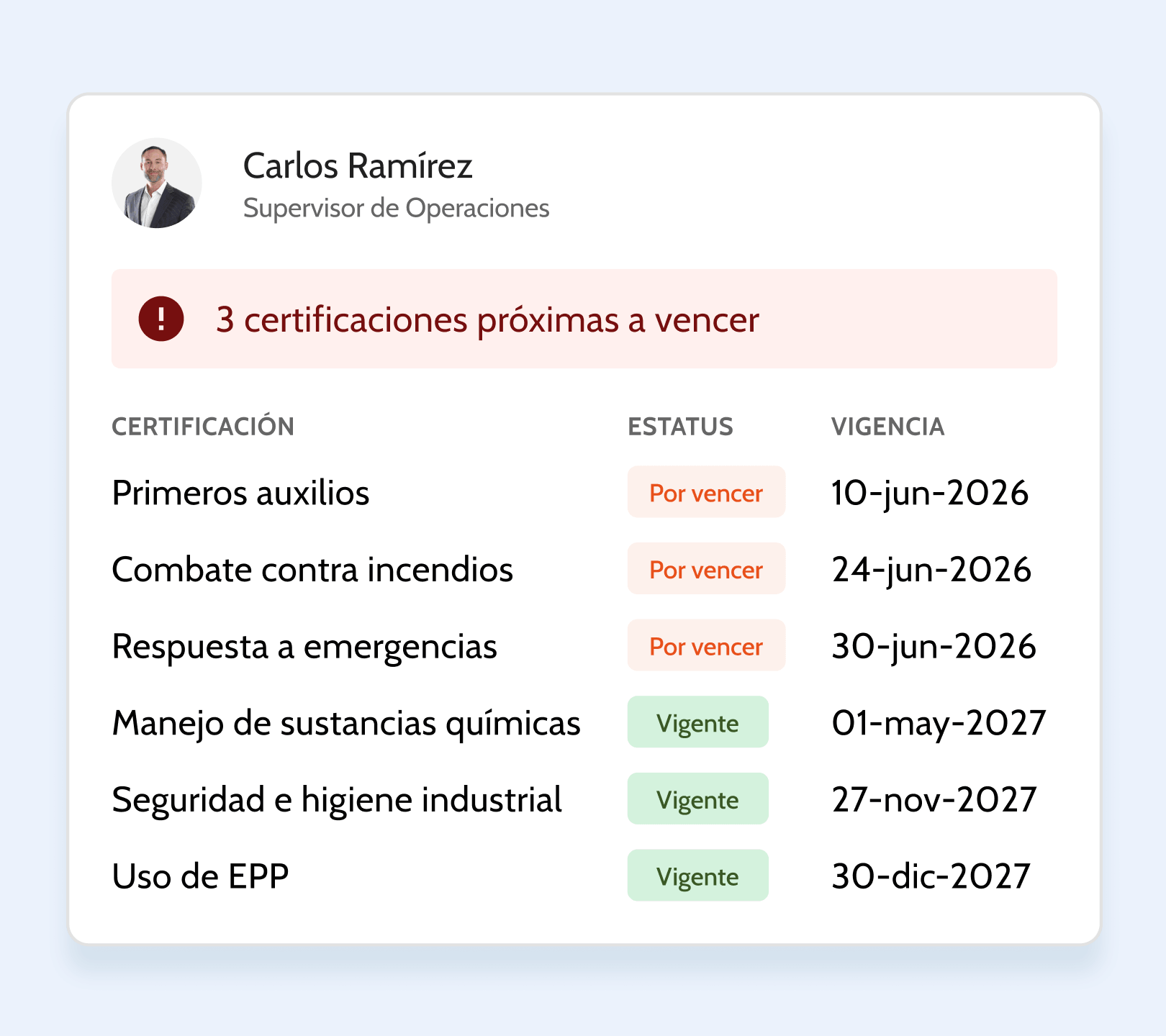
Employee Tracking

Compliance reporting
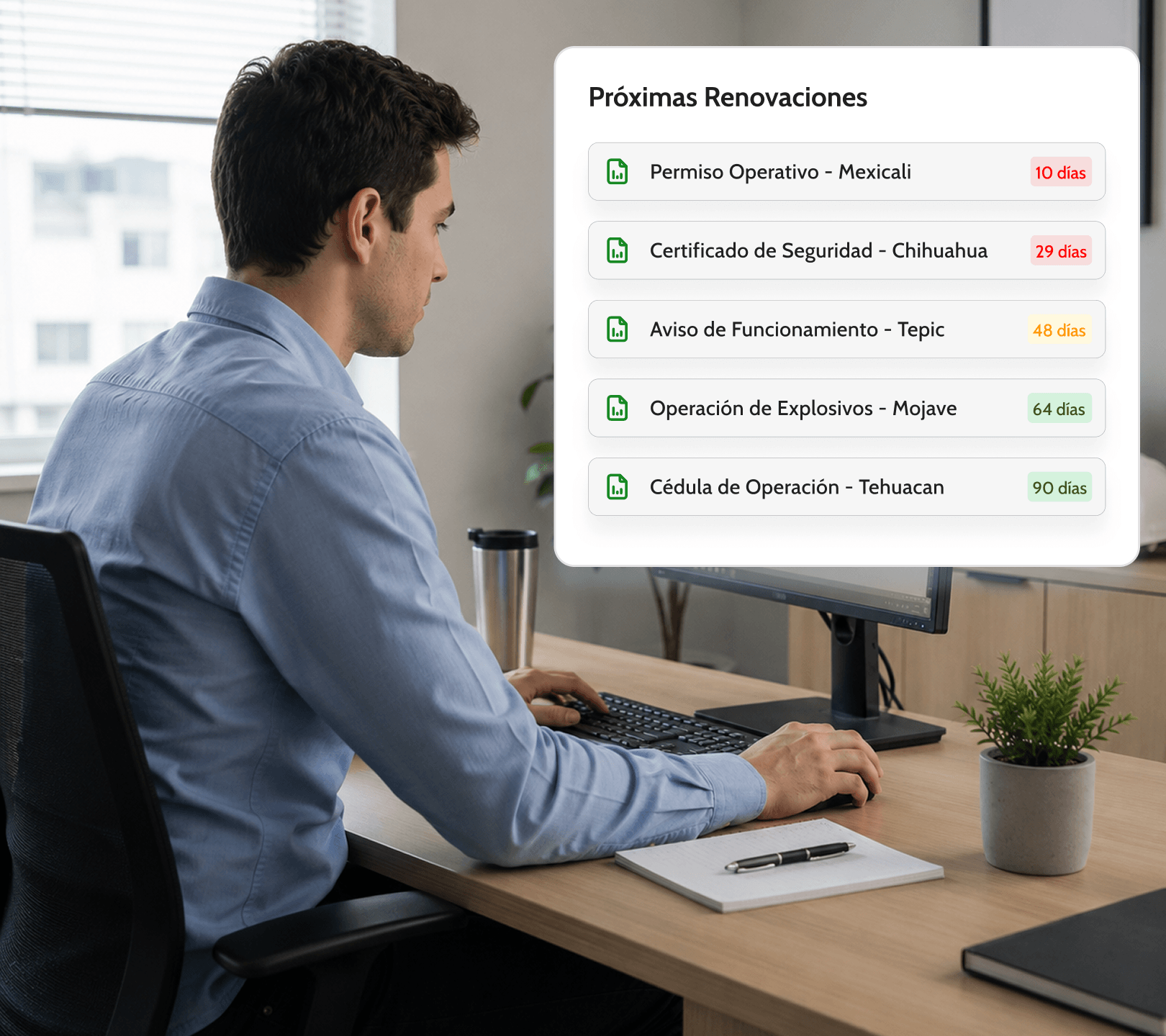
Visibility across the entire chain
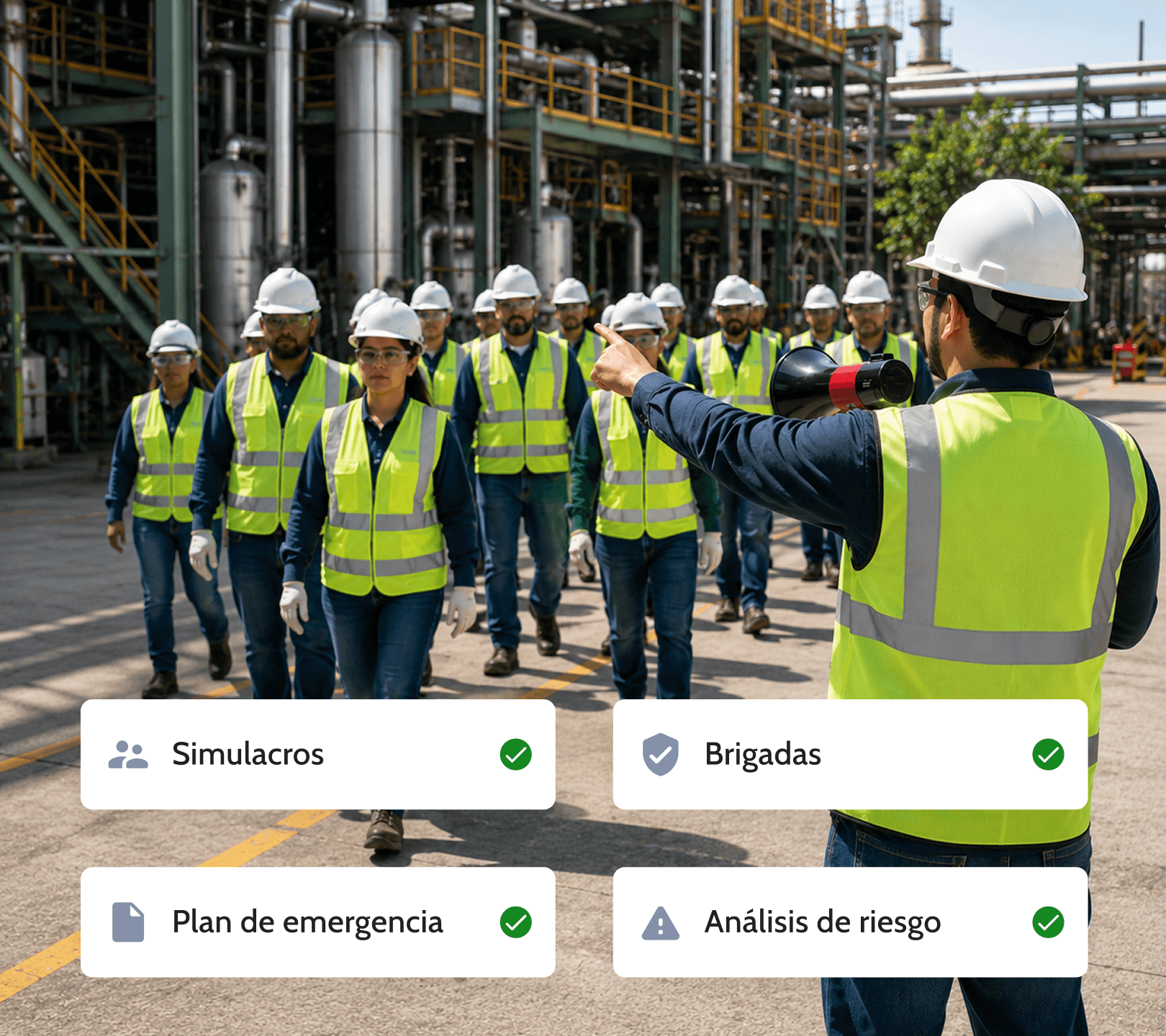
Civil Protection Preparedness
Location-adapted catalog
Permit Catalog — Retail
Comprehensive permit base for retail operations in Mexico.
Define requirements from onboarding based on format and location, with a complete catalog ready for each point of sale.
| Municipal operating license | Municipality | Annual (commonly) | Critical | License and payment receipts |
| Land use / zoning certificate | Municipality | Variable | Critical | Land use authorization |
| Advertising permits | Municipality | Variable | Low | Advertising authorizations |
| License for sale of alcoholic beverages (where applicable) | Municipality / State | Annual | Critical | License and conditions |
| Internal Civil Protection Program (PIPC) | State / Municipal Civil Protection | Annual (commonly) | Critical | Program and risk analysis |
| Fire risk classification (NOM-002-STPS) | Civil Protection / STPS | Per evaluation | Critical | Classification and compliance evidence |
| Extinguisher certification and maintenance | Civil Protection / NOM-154-SCFI | Annual | High | Maintenance certificates |
| Fixed fire suppression systems (where applicable) | Civil protection | Periodic | Critical | System certificates and functional tests |
| Emergency drills with evaluation | Civil protection | Periodic | High | Drill logs and evaluation reports |
| Emergency brigade training | Civil protection | Ongoing | High | Training certificates per brigade member |
| Maintenance of elevators and escalators | NOM-053-SCFI* / applicable regulations | Periodic | Critical | Maintenance certificates and records |
| Health license | COFEPRIS | Per facility | Critical | Sanitary license (food/pharmacy) |
| NOM-251-SSA1 – Hygiene practices for processing foods, beverages, or dietary supplements | COFEPRIS | Ongoing | Critical | Hygiene program and inspection evidence |
| Food handler certifications | COFEPRIS / State | Per employee | High | Individual certificates |
| Permits for controlled medication handling | COFEPRIS | Per facility | Critical | License and records (pharmacies) |
| Registration of the health officer in charge | COFEPRIS | Per facility | Critical | Current registration (pharmacies) |
| Gas installation safety | Competent authority / Verification Unit | Periodic | High | Installation certificates and opinions |
| NOM-001-STPS – Buildings, premises, and facilities in workplaces | STPS | Ongoing | Medium | Inspection evidence |
| NOM-002-STPS – Fire prevention and protection | STPS | Ongoing | High | Training program and records |
| NOM-006-STPS – Handling and storage of materials | STPS | Ongoing | Medium | Procedures and training |
| NOM-009-STPS – Work at heights | STPS | Ongoing | High | Certifications and procedures (CEDIS where applicable) |
| NOM-017-STPS – Personal protective equipment | STPS | Ongoing | Medium | PPE matrix and records |
| NOM-026-STPS – Safety and hygiene colors and signs | STPS | Ongoing | Medium | Signage plan and photographs |
| NOM-030-STPS – Preventive occupational health and safety services | STPS | Ongoing | Medium | Annual program |
| Hazardous materials management | STPS / SEMARNAT | Ongoing | High | Handling procedures (where applicable) |
| Evidence of waste management and disposal | Local authority / Authorized providers | Ongoing | Medium | Manifests and collection receipts |
| Environmental impact rights or contributions | State / Municipal | Variable | Low | Payment receipts |
Not all permits apply to all retail types. The platform configures the catalog by location type during onboarding. Critical = closure risk. High = fines + restrictions. Medium = administrative.
Ideal profiles for NAPSsoft EHS in retail.
Specialty and department retail
Big-box stores and distribution centers (CEDIS) with a focus on occupational safety, materials handling, and hazardous substances in accordance with the STPS.
Shopping centers and malls
They operate high-risk buildings, manage elevator maintenance (NOM-207), and coordinate tenant compliance.
EHS Consulting Firms for Retail
Firms that manage multi-client portfolios and require a platform to track permits across portfolios.
Restaurants and food services
They manage NOM-251 food safety, gas installations, and civil protection across dozens of operating units.
Pharmacy chains
They manage COFEPRIS compliance, controlled substances, and retail permits across networks with extensive nationwide coverage.
Supermarkets and Convenience
Multi-format operators with 20 to 500+ locations. They manage compliance across various states and municipalities in Mexico.
Specialty and department retail
Big-box stores and distribution centers (CEDIS) with a focus on occupational safety, materials handling, and hazardous substances in accordance with the STPS.
Shopping centers and malls
They operate high-risk buildings, manage elevator maintenance (NOM-207), and coordinate tenant compliance.
EHS Consulting Firms for Retail
Firms that manage multi-client portfolios and require a platform to track permits across portfolios.
Restaurants and food services
They manage NOM-251 food safety, gas installations, and civil protection across dozens of operating units.
Pharmacy chains
They manage COFEPRIS compliance, controlled substances, and retail permits across networks with extensive nationwide coverage.
Supermarkets and Convenience
Multi-format operators with 20 to 500+ locations. They manage compliance across various states and municipalities in Mexico.
Reduce exposure from the start