



EHS for Oil and Gas in Mexico
Centralize permits, renewals, and evidence to comply with ASEA, CRE, SEMARNAT, and STPS. Keep every site in compliance, reduce operational risks, and prepare for frictionless inspections.

Cinco autoridades, una sola operación.
Las operaciones de petróleo y gas en México están reguladas por múltiples autoridades a nivel federal, estatal y municipal. Entender quién regula cada aspecto y las consecuencias de incumplir plazos es el punto de partida de cualquier estrategia de cumplimiento
ASEA
Agency for Safety, Energy and Environment
The primary regulator of industrial safety, operational safety, and environmental protection in the hydrocarbons sector. ASEA oversees compliance with SASISOPA, technical verifications, emergency response plans, and incident reporting. Non-compliance can result in operational shutdown, fines, and permit revocation.

CRE / CNE
Energy Regulatory / National Commission
Issues permits for the sale, storage, transport, and distribution of fuel. With the 2025 energy reform, CRE's functions are transitioning to the new CNE. Existing permits must align with the new rules; upcoming renewals (1 year) require processing within 90 days. Without a valid permit, operation is illegal.

SEMARNAT
Secretariat of Environment and Natural Resources
Oversees environmental impact assessments (MIA), atmospheric emissions, hazardous waste management, and wastewater discharge. Applies to any fuel operation that generates emissions or handles hazardous materials.

STPS
Secretariat of Labor and Social Welfare
Regulates workplace safety through NOMs. Key standards include NOM-002 (fire), NOM-005 (substances), NOM-017 (PPE), NOM-018 (hazards), NOM-026 (signage), and NOM-030 (prevention), fundamental to fuel operations.

Civil Protection + Municipal
400+ local obligations
Operating licenses, land use permits, emergency plans, fire protection systems, and drill records. Requirements vary by state and municipality.
Continuous Governance for Hydrocarbons
SASISOPA — the backbone of governance
SASISOPA is Mexico's mandatory industrial and environmental safety system. It integrates 17 elements that must be documented, operated, and audited continuously, with direct ASEA oversight at any time.
1
Scope and objectives
Defines which activities, facilities, and personnel are covered.
2
Leadership and commitment
Management commitment and resource allocation.
3
Planning
Identification of risks, legal requirements, objectives, and targets.
4
Risk management
Hazard analysis, risk assessment, and mitigation plans.
5
Personnel competency
Training programs, certifications, and competency records.
6
Operating procedures
Standard operating procedures for all regulated activities.
7
Change management
Formal process for managing changes to facilities, processes, or personnel.
8
Contractor management
Safety requirements for third-party contractors.
9
Mechanical integrity
Maintenance, inspection, and testing of critical equipment.
10
Process safety
Safety barriers, alarms, and emergency shutdowns.
12
Emergency response
Emergency plans, drills, brigades, and communication protocols.
13
Incident investigation
Root cause analysis and follow-up on corrective actions.
14
Compliance assurance
Internal audits, regulatory audits, and corrective actions.
15
Communication and consultation
Information exchange with authorities, communities, and employees.
16
Document control
Management of all documentation related to SASISOPA.
17
Continuous improvement
Performance metrics, management review, and improvement plans.
11
Pre-startup review
Verification before starting or restarting operations.
Each element requires documentation, evidence, and periodic review.
NAPSsoft EHS structures compliance by category, links evidence to each requirement, assigns owners, and automates verification tracking.

Five types of operations.
Five distinct risk profiles.
Gas Station Chains
Gas station chains in Mexico operate more than 11,000 stations since the energy reform. Each one requires a CRE/CNE permit, SASISOPA, environmental permits, STPS programs, and municipal licenses. The challenge for chains: each station is an independent regulated site, but the operator needs unified visibility across 10, 50, or 200+ locations. Requirements vary by state and municipality.
Key Risk
HOW NAPSSOFT SOLVES IT

The shutdown of a single station triggers immediate ASEA scrutiny across the entire supply chain.
A failed inspection at one location triggers cascading audits across every service station in the network.
HOW NAPSSOFT SOLVES IT

Standardizes the permit catalog across all sites, adapting requirements to each municipality's regulations.
Projects renewals and assigns owners per station through a centralized dashboard for the entire network.
Key Permits/NOMs:
CRE / CNE Permit
SASISOPA
ASEA technical verifications
Fire protection system
STPS workplace safety
SEMARNAT hazardous waste
LP Gas Distribution
LP Gas powers homes, vehicles, and industry where natural gas does not reach. Its chain—plants, tank trucks, and cylinders—is regulated by ASEA and CRE/CNE. In 2025, ASEA declared it a high-risk activity, activating emergency standards with strict requirements:
- NOM-EM-006-ASEA-2025 — Transport. Active GPS, 80 km/h speed limit, and safety evidence on tank trucks.
- NOM-EM-007-ASEA-2025 — Distribution. Hydrostatic tests, annual reports, and documented maintenance. Managing per-unit compliance across fleets of 500+ vehicles is now a massive coordination challenge.
Key Risk
HOW NAPSSOFT SOLVES IT
LP gas transport is a high-risk activity where traffic incidents escalate into operational and safety crises.
Fleet regulatory non-compliance can result in immediate unit shutdown and revocation of federal permits.
Lack of control over vehicles on federal highways increases the likelihood of accidents and severe scrutiny from ASEA.
HOW NAPSSOFT SOLVES IT
Assigns each unit a digital record with hydrostatic tests, safety certifications, labeling, and maintenance logs.
Projects critical fleet renewals 30, 60, and 90 days out to prevent vehicle downtime from expired permits.
Unifies compliance for fixed facilities and the mobile fleet on a single platform with full dashboard visibility.
Key Permits/NOMs:
CRE / CNE distribution permit
NOM-EM-006 transport
NOM-EM-007 distribution
Tank hydrostatic tests
Verified GPS tracking
Fuel Storage and Distribution Terminals
Terminals and distribution centers are classified as high-risk facilities under ASEA: they require rigorous SASISOPA implementation, mechanical integrity, process safety analysis, and emergency response. ASEA inspections can last days and cover every SASISOPA element. A missing log or expired certificate can escalate to operational restrictions.
Key Risk
HOW NAPSSOFT SOLVES IT
Una clausura en estos sitios de alto impacto disrumpe toda la cadena de suministro aguas abajo y detiene la operación nacional.
El incumplimiento en instalaciones críticas detona multas en la escala máxima permitida por los organismos reguladores.
La falta de control en sitios de mayor consecuencia pone en riesgo la licencia social para operar y la reputación corporativa.
HOW NAPSSOFT SOLVES IT
Estructura los 17 elementos de SASISOPA como categorías de cumplimiento rastreables con vinculación directa de evidencia técnica.
Programa ciclos de verificación automática para garantizar que la instalación esté siempre lista ante auditorías e inspecciones.
Proporciona un dashboard en tiempo real que permite a la dirección corporativa monitorear el nivel de preparación de cada sitio.
Key Permits/NOMs:
CRE / CNE storage permit
SASISOPA (17 elements)
Verificaciones técnicas ASEA
Manifestación de impacto (MIA)
Licencia ambiental LAU
Natural Gas Pipelines and Processing Plants
Natural gas generates 54% of electricity in Mexico. Its pipeline and plant network is regulated by ASEA under the strictest standards. Operators must address regulatory gaps before 2026 deadlines to avoid sanctions, suspensions, or permit revocations.
In 2025, ASEA updated the regulatory framework with these fundamental standards:
- NOM-019-ASEA-2024 — Processing Facilities. Mandatory from March 1, 2026. Replaces NOM-137. Expands emissions control to comprehensive industrial and operational safety.
- NOM-020-ASEA-2024 — Pipeline Transport. Mandatory from February 28, 2026. Replaces NOM-007. Requires risk-based integrity management, anti-corrosion, and ASME/API/ASTM standards.
Key Risk
HOW NAPSSOFT SOLVES IT
Las fallas en ductos y procesamiento tienen consecuencias catastróficas que demandan los estándares de seguridad más altos de la industria.
El incumplimiento de los plazos regulatorios para el primer trimestre de 2026 pone en riesgo crítico la vigencia de tus permisos de operación.
La falta de monitoreo en la infraestructura de gas natural eleva la probabilidad de incidentes mayores y sanciones severas por parte de la autoridad.
HOW NAPSSOFT SOLVES IT
Estructura los requisitos de las NOM-019 y NOM-020 como categorías de cumplimiento rastreables con evidencia vinculada.
Mapea cada tramo de ducto con tareas específicas de gestión de integridad y cumplimiento por planta de procesamiento.
Rastrea el progreso de la evaluación de brechas en tiempo real para asegurar el cumplimiento total antes de los plazos obligatorios.
Key Permits/NOMs:
Permiso CRE / CNE transporte
Integridad de ductos (NOM-020)
Verificaciones técnicas ASEA
Manifestación de impacto (MIA)
Control de emisiones de metano
Residuos peligrosos SEMARNAT
SASISOPA (17 elementos)
Plan de emergencia + protección civil
Industrial Fuel Operations
Many industrial facilities in Mexico operate fuel storage or gas supply as part of their operations, not as their core business. Even so, they fall under the jurisdiction of ASEA and CRE/CNE. This frequently surprises companies that did not know a single fuel tank or gas system triggers SASISOPA compliance requirements.
Key Risk
HOW NAPSSOFT SOLVES IT
Las empresas suelen descubrir el incumplimiento en permisos de combustible hasta que enfrentan una inspección federal o estatal.
Al no ser el núcleo del negocio, la infraestructura de combustible se ignora operativamente, acumulando riesgos de clausura silenciosos.
HOW NAPSSOFT SOLVES IT
Integra los permisos de combustible al catálogo de cumplimiento general para que ninguna obligación sea omitida por descuido.
Automatiza el señalamiento de renovaciones y requisitos de evidencia específicos para hidrocarburos dentro del calendario operativo.
Key Permits/NOMs:
Permiso CRE / CNE autoabastecimiento
SASISOPA
Residuos peligrosos SEMARNAT
Seguridad en manejo de combustible STPS
Licencia municipal
configurado para tu industria
De cumplimiento disperso a control con gobernanza.
Un sistema que entiende las operaciones de petróleo y gas en México, no un gestor de documentos genérico que tienes que adaptar por sitio.

Scale Across All Your Sites

Ready for Inspections
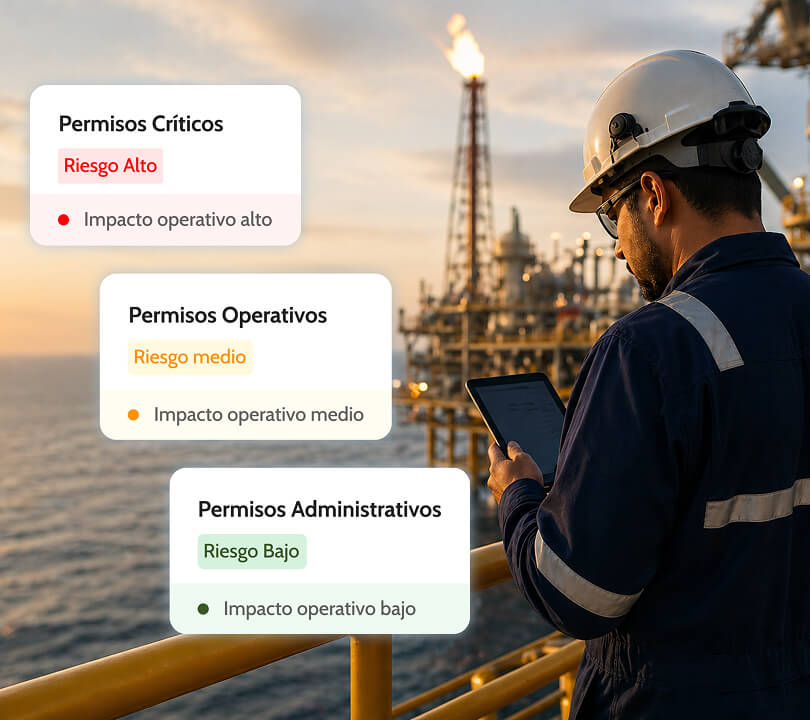
Prioritize by Operational Risk

Unify Authorities in One View

Structure the Complete SASISOPA
Catálogo de permisos — PETRÓLEO Y GAS
Base integral de permisos para operaciones de combustible en México.
Los catálogos finales se configuran por tipo de sitio, clasificación de actividad CRE y estado/municipio durante el onboarding.
| CRE permit for retail fuel sales | CRE | According to permit validity | Critical | Authorization and conditions |
| CRE permit for storage and distribution | CRE | According to permit validity | Critical | Authorization and conditions |
| CRE permit for transport | CRE | According to permit validity | Critical | Authorization and conditions |
| SASISOPA implementation | ASEA | Ongoing | Critical | Documentary evidence of the 17 elements |
| ASEA technical verifications | ASEA / Verification Unit | Periodic | Critical | Verification reports |
| Incident reporting to ASEA | ASEA | Per event | Critical | Investigation and corrective actions |
| NOM-EM-006-ASEA – LP gas transport | ASEA | Per vehicle | Critical | Certificates, GPS, labeling, and speed control |
| NOM-EM-007-ASEA – LP gas distribution | ASEA | Per vehicle | Critical | Hydrostatic tests and maintenance |
| Safety certifications for LP gas vehicles | ASEA / SICT | Periodic | Critical | Certificates per unit |
| NOM-019-ASEA – Natural gas processing facilities | ASEA | Ongoing | Critical | Evidence from design to operation |
| NOM-020-ASEA – Natural gas pipeline transport | ASEA | Ongoing | Critical | Evidence of integrity and safety |
| Pipeline integrity management program | ASEA | Ongoing | Critical | Inspections, monitoring, and corrosion control |
| Methane emissions control | ASEA | Ongoing | High | Baseline and monitoring plan |
| Environmental Impact Assessment (MIA) | SEMARNAT | Per project | High | Resolution and conditions |
| Atmospheric emissions license | SEMARNAT | Variable | High | License and monitoring data |
| Registration as a hazardous waste generator | SEMARNAT | Registration | High | Registration and manifests |
| Annual Operation Certificate (COA) | SEMARNAT | Annual | Medium | Evidence of submission |
| Wastewater discharge permit | CONAGUA / Municipality | Variable | Medium | Permit and sampling results |
| NOM-002-STPS – Fire prevention and protection | STPS | Ongoing | High | Training program and records |
| NOM-005-STPS – Handling of hazardous chemicals | STPS | Ongoing | High | Handling procedures |
| NOM-017-STPS – Personal protective equipment | STPS | Ongoing | Medium | PPE matrix and records |
| NOM-018-STPS – Harmonized system for the identification and communication of hazards and risks from hazardous chemical substances | STPS | Ongoing | Medium | Safety Data Sheets (SDS) and labeling |
| NOM-026-STPS – Safety and hygiene colors and signs | STPS | Ongoing | Medium | Signage plan and photographs |
| NOM-030-STPS – Preventive occupational health and safety services | STPS | Ongoing | Medium | Annual program and inspections |
| Internal Civil Protection Program | State Civil Protection | Annual (generally) | High | Plan, drills, and brigades |
| Emergency response plan | State Civil Protection / ASEA | Ongoing | Critical | Plan and drill records |
| Fire protection system certifications | State Civil Protection | Periodic | High | Maintenance certificates |
| Municipal operating license | Municipality | Variable | Medium | License and payment receipts |
| Land use / zoning | Municipality | Variable | Medium | Land use certificate |
| Environmental impact fees or contributions | State / Municipal | Variable | Low | Proof of payment |
Criticality: Critical = can trigger immediate closure. High = can trigger fines + operational restrictions. Medium = administrative sanctions. Requirements vary by CRE activity classification and local authority.
Ideal profiles for NAPSsoft EHS in oil and gas.
EHS Consulting Firms
Manage compliance for multiple energy clients. Centralize permits and evidence in a single portfolio.
Industrial Infrastructure
Factories and logistics centers handling hydrocarbons. Align CRE/ASEA requirements with your standard EHS obligations.
Natural Gas & Pipelines
Meet NOM-019 and NOM-020 requirements before the 2026 deadlines. Manage pipeline integrity and compression.
Storage & Logistics
Operate high-volume terminals with full ASEA/SASISOPA rigor. Ensure mechanical integrity at critical facilities.
LP Gas Distributors
Manage plants and fleets under the new NOM-EM-006 and NOM-EM-007 standards of 2025. Control high risk in every tank truck.
Gas Station Chains
Standardize compliance across networks of 5 to 200+ stations. Manage post-reform brands with a unified view.
EHS Consulting Firms
Manage compliance for multiple energy clients. Centralize permits and evidence in a single portfolio.
Industrial Infrastructure
Factories and logistics centers handling hydrocarbons. Align CRE/ASEA requirements with your standard EHS obligations.
Natural Gas & Pipelines
Meet NOM-019 and NOM-020 requirements before the 2026 deadlines. Manage pipeline integrity and compression.
Storage & Logistics
Operate high-volume terminals with full ASEA/SASISOPA rigor. Ensure mechanical integrity at critical facilities.
LP Gas Distributors
Manage plants and fleets under the new NOM-EM-006 and NOM-EM-007 standards of 2025. Control high risk in every tank truck.
Gas Station Chains
Standardize compliance across networks of 5 to 200+ stations. Manage post-reform brands with a unified view.
Start small. Scale with evidence